
Nuances of melodic birdsong. The lush diversity of Madhya Pradesh’s forests. And the singular habits of native birds that rely on their trees to thrive. Jambu Singad notices it all, and channels his observations into paintings that celebrate the integrity of our natural world.
Jambu is a member of one of India’s oldest surviving tribes, the Bhils. With no formal education, he left his village to work as a gardener in the nearby city of Bhopal. But he’s always retained a deep connection to his home in the countryside. It’s there that his sister taught him how to paint. Bhil women traditionally decorate their mud houses with dot-speckled images of deities, daily life, and nature. Painting in his spare time, Jambu’s experiments with color, form and contrasts gave rise to his own distinct style and vision.
That vision is published for the first time in Birds like Trees, a recent release from Chennai-based Tara Books. Gita Wolf founded the independent publishing house three decades ago after she returned to India from Germany, and searched in vain for books that could help her young son relate to his new surroundings.
“We mostly read the children’s books that I had read as a child, where the fun and adventure always happened in other places. It was never here. And the stories were so moralistic and very didactic. There was nothing contemporary.”
Together with an artist friend, Gita penned one children’s book, and another. “Then I went to the Frankfurt Book Fair with just two books, and incredibly enough, sold both to a Canadian publisher. It was the only appointment I had! I had no clue as to what publishing involved. Absolutely none. So it’s in the doing that it happened.”
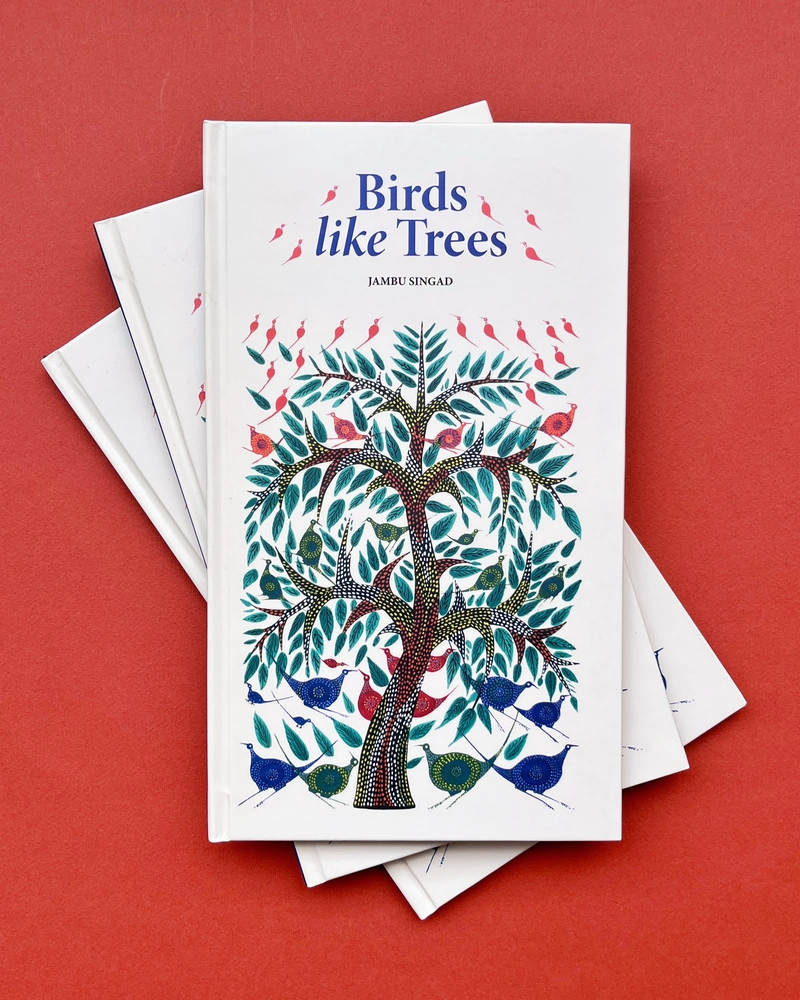
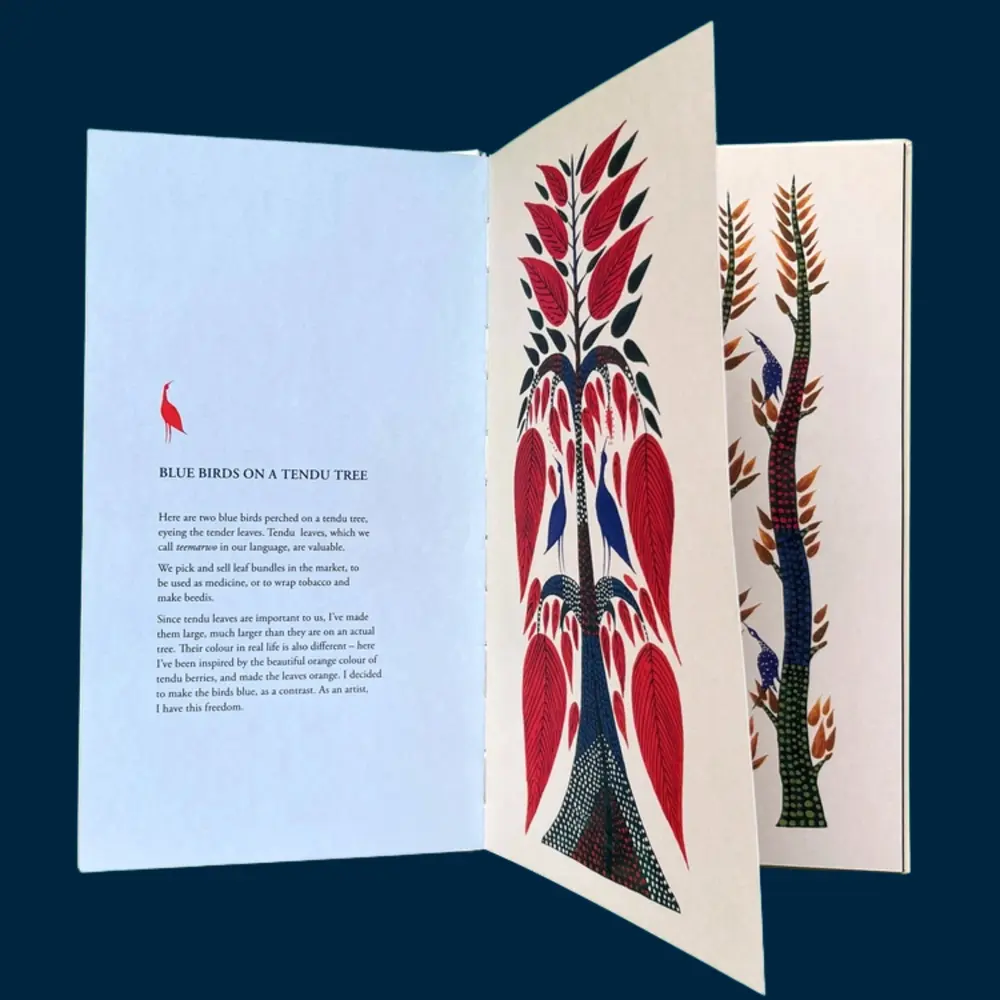
Excerpt from Jambu Singad’s “Birds like Trees”.
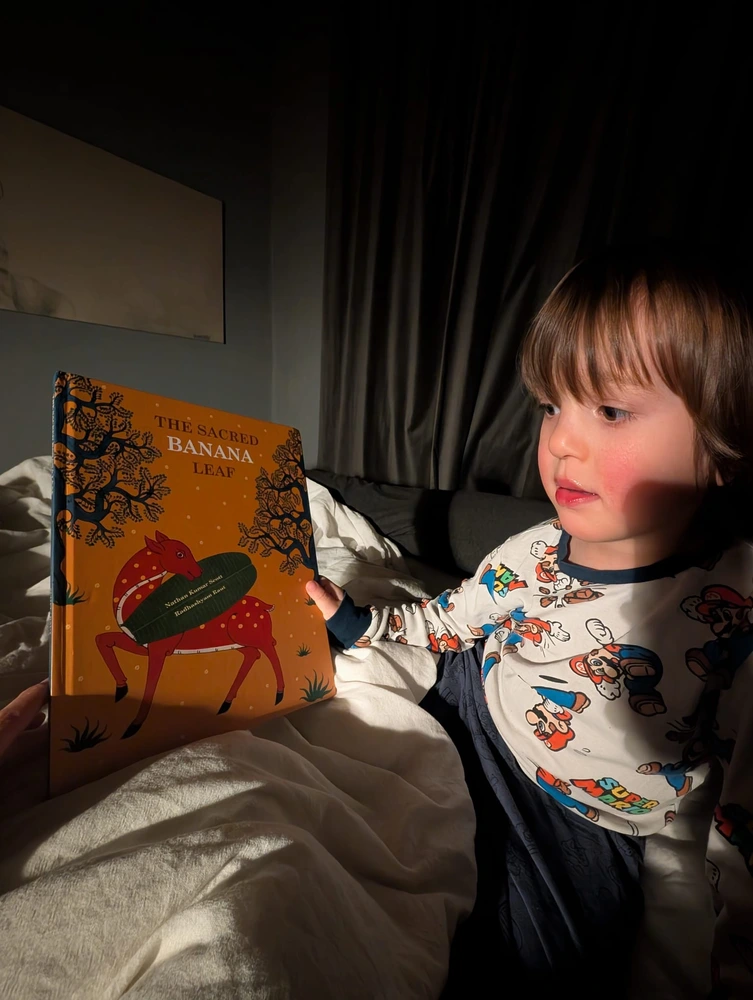
Story time for a fan in Germany.
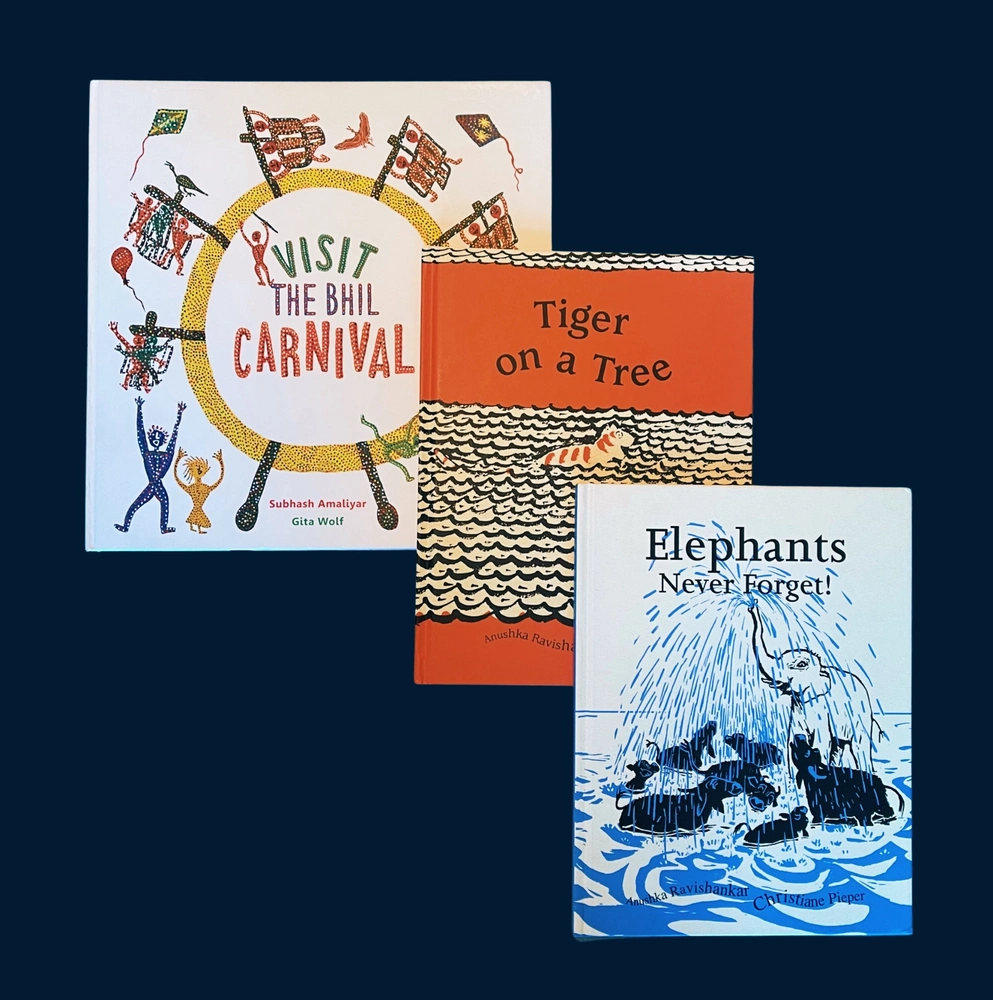
Illustrated Tara Books for children.
Over the years Tara Books has grown into an internationally acclaimed publishing house. Its illustrated books for children and adults have pocketed more than 80 international prizes. The studio operates as a collective of writers, artists and designers from around the world. But its focus lies at home: on the promotion of Indian folk and artisanal crafts, and on giving a platform to marginalized voices – regardless of class, caste or gender. It’s a nondidactic marriage of aesthetics and politics, for which Tara harnesses unsung talents – from tribal artisans to textile artists and signboard painters – lending them a unique opportunity to bring their skills, styles and creativity to a global audience.
“We’ve given traditional artists another framework to tell their stories,” says Gita. “We were the first to bring them into the space of the book, and over the years we’ve drawn attention to the fact that these people are our contemporaries. They’re not living somewhere, in some other time. They speak to us, because we live in the same time, even if it’s not in the same location.”
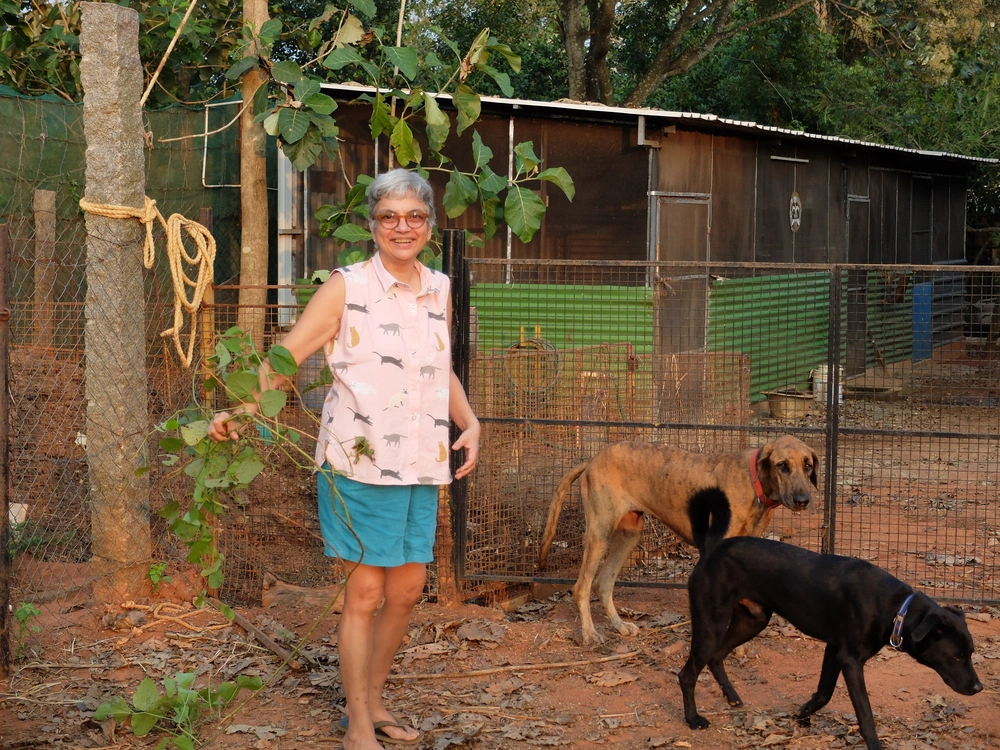
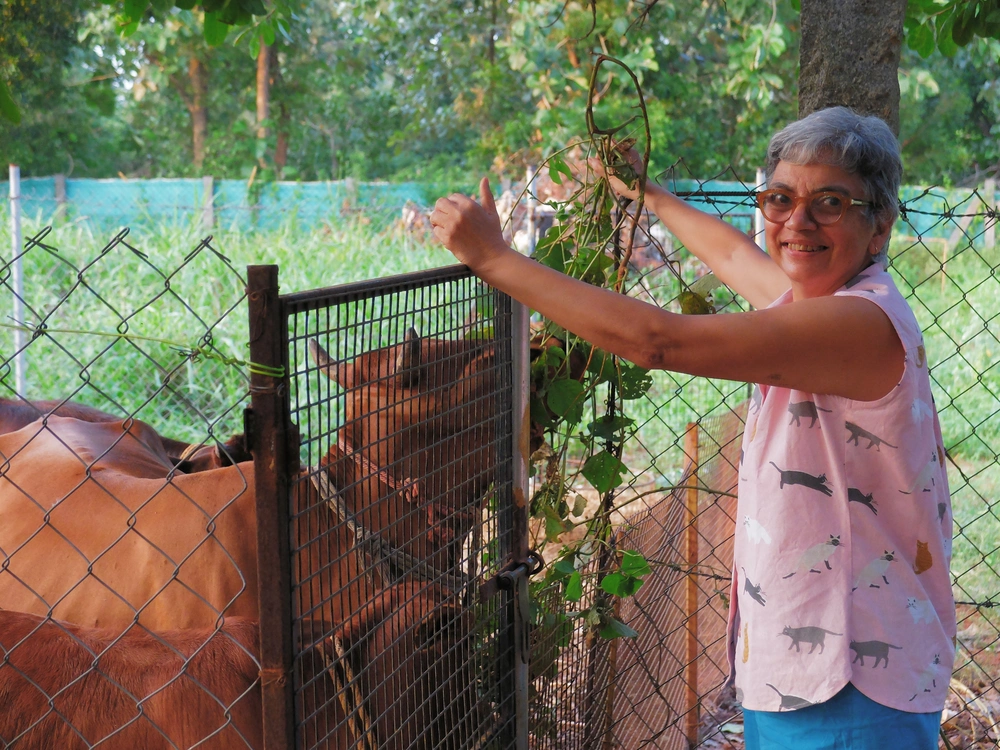
Tara Books publisher Gita Wolf left the bustle of Chennai to live and work on an organic farm near Pondicherry in southern India.
One book that has spoken to many is the Tara Books bestseller The Women I Could Be by Sangita Jogi. It’s an exuberant display of women going about their daily lives in India’s rapidly growing cities – lives the author can only imagine. The daughter of self-taught nomadic artists from Rajasthan, Sangita was married young. By the time she was in her early twenties, she was already a mother of four. She lives in a poor, rural and rigidly patriarchal community. And yet her drawings are dynamic and joyful. Gita says her team was blown away when it encountered Sangita’s work. “Her art had a youthful, edgy brilliance which was completely her own. Her women were uncompromisingly modern – fun, feisty, fashionable, and outrageously over the top.”
Cover and pages from The Women I Could Be by Sangita Jogi.
Aside from championing fresh perspectives and voices, Tara Books is dedicated to the promotion of artisanal techniques like block or screen-printing, where the entire process – from paper and printing to binding – is done by hand. And it’s known for bending the boundaries of the physical book itself. Like the pop-up Seed. A meditation on the power of life, the book sprang from Gita’s isolation during lockdown on her organic farm near Pondicherry. She gave two brothers from the Warli tribe free reign for the illustration. As farmers themselves, the artists have a keen interest in ecology and a lived kinship with nature.
“I could never have imagined what they ended up doing with Seed,” says Gita. “The artists shaped it like a basket. This is a Warli basket to gather seeds. In India the visual cuts across language, because we have so many languages. It allows us into realities which are not ours, and so we’re not trapped. Because being in a bubble is being trapped. So it exposes you to something else that you couldn’t imagine.”
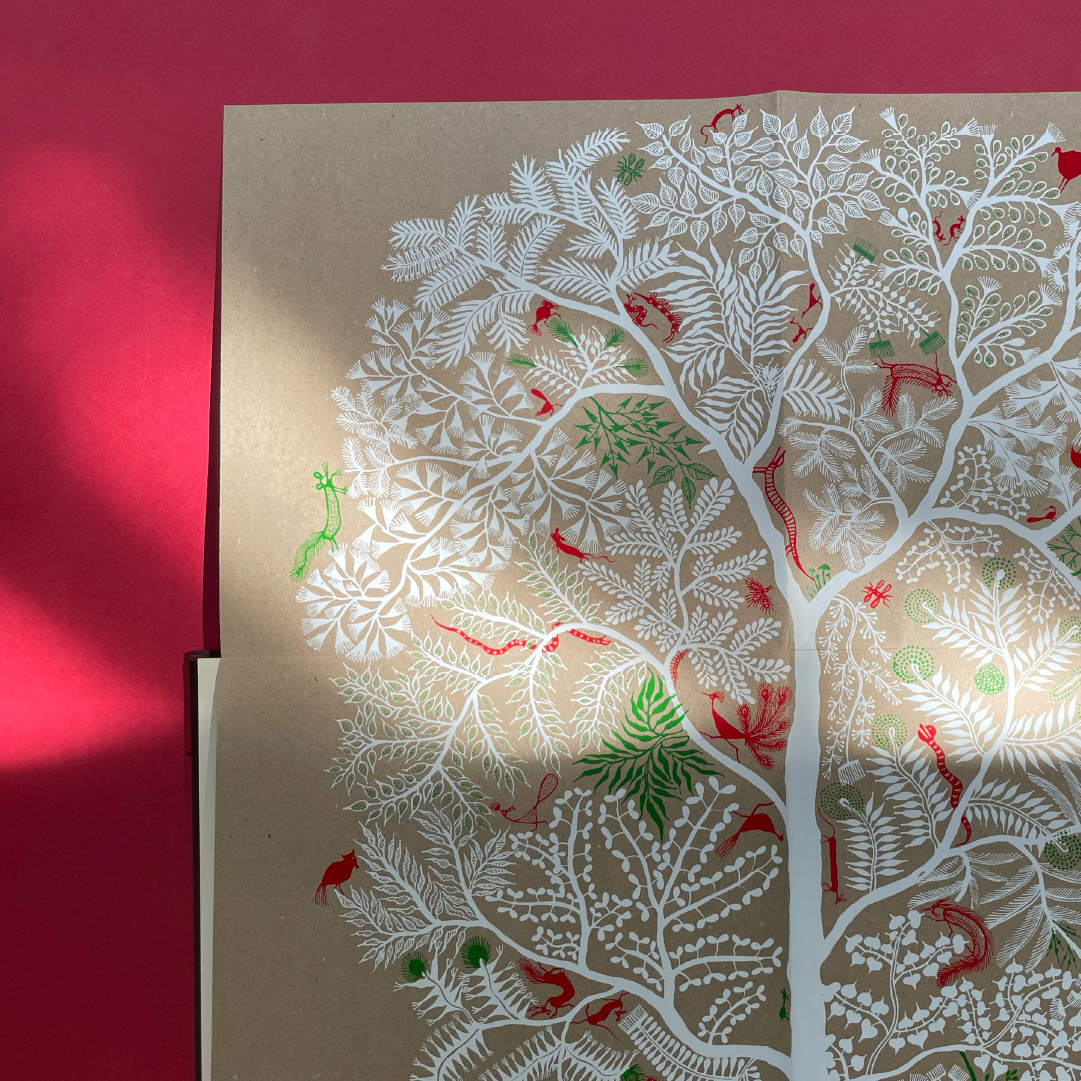
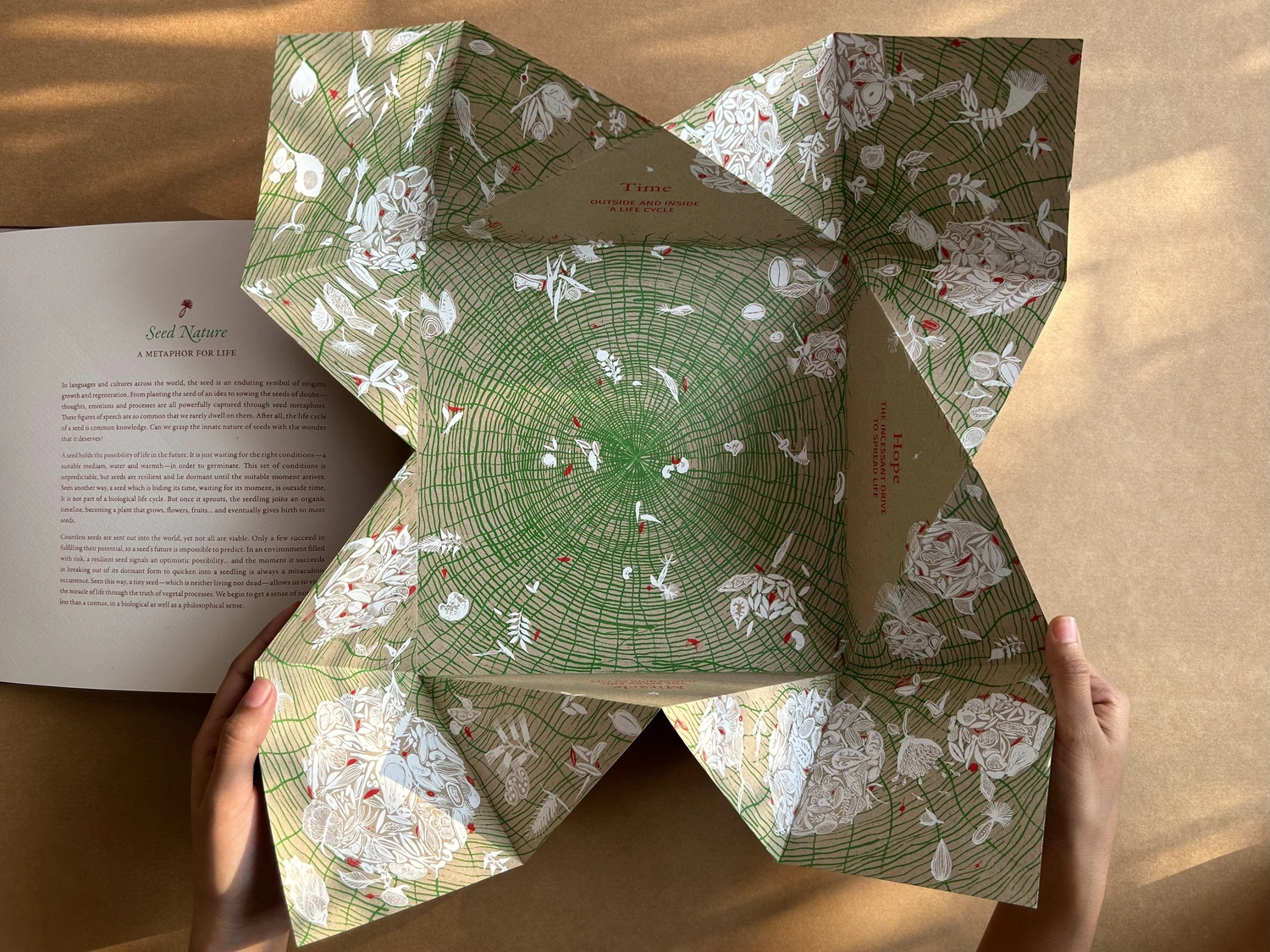
The pop-up book Seed by Gita Wolf, with illustrations by Mayur Vayeda and Tushar Vayeda.
Tara Books’ experiments with points of view, form, type and texture yield unique, sensory experiences. The result isn’t just a beautiful book: it’s a celebration of cultural heritage that bridges the gap between traditional and contemporary. Precisely what Gita Wolf was looking for thirty years ago. By taking action to fulfill her own need for a modern-day storybook, she’s inspired writers, artists and readers alike, creating a legacy of literature for generations to come.
